You Won’t Believe What This Neighborhood Hides—Nepal’s Urban Soul Uncovered
Have you ever walked into a place and instantly felt its pulse? That’s Bodhnath in Kathmandu—where prayer flags flutter like whispers, golden stupas glow in sunlight, and narrow alleys hum with incense and chants. Far from just a spiritual hub, it’s a living urban tapestry. I didn’t expect to feel so connected. This isn’t just sightseeing—it’s immersion. Let me take you through the rhythm, textures, and quiet magic of one of Nepal’s most soulful cityscapes.
First Glimpse: Arriving in Bodhnath
The journey to Bodhnath begins with a shift—one that unfolds not in miles, but in mood. As visitors leave behind the honking chaos of central Kathmandu, the city slowly exhales. Taxis wind through neighborhoods where laundry hangs above cracked sidewalks and street vendors call out over sputtering generators. Then, suddenly, the air changes. A faint scent of burning juniper rises. The sound of rhythmic chanting grows louder, layered beneath the occasional chime of a distant bell. This is the threshold of Bodhnath, a neighborhood where the sacred is not tucked away in temples, but spills into every corner of daily life.
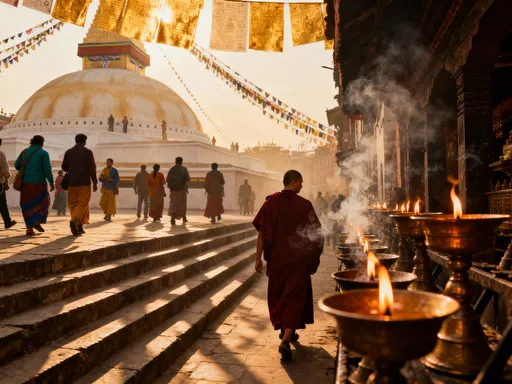
For many, the first true vision of the Great Stupa comes at dawn. As sunlight spills over the eastern rooftops, the golden spire catches fire, glowing with a warmth that seems almost alive. Pilgrims have already begun their kora—walking clockwise around the stupa in quiet devotion. Some spin prayer wheels with practiced ease, others press their palms together in silent prayer. The air is cool, the light soft, and the moment feels suspended. It’s not just the visual grandeur that strikes visitors; it’s the stillness beneath the movement, the sense that something ancient and meaningful is unfolding in real time.
Sensory impressions build quickly. The fragrance of butter lamps flickering inside the prayer halls mingles with the earthy aroma of damp stone and aged wood. Monks in maroon and saffron robes move with calm purpose, their sandals tapping lightly against the stone pathways. Children dart between stalls selling marigolds and incense, their laughter blending with the low hum of mantras played from speakers near shrine alcoves. It’s an overload, yes—but not an overwhelming one. Instead, it feels like stepping into a different kind of order, one governed not by traffic lights or schedules, but by rhythm, ritual, and reverence.
The Stupa as the Heartbeat
At the center of Bodhnath lies the Great Stupa, a structure whose significance stretches far beyond its physical presence. More than 2,500 years old according to tradition, it is believed to house relics of the Buddha and serves as one of the most important pilgrimage sites in Tibetan Buddhism. Its massive mandala design—white dome, golden spire, and the all-seeing eyes painted on each side—embodies both spiritual philosophy and architectural harmony. The eyes, gazing out in all four directions, symbolize wisdom and compassion, reminding all who pass by that mindfulness is always watching.
Daily life in Bodhnath orbits around this sacred axis. From early morning until dusk, locals and pilgrims alike walk the kora path, completing circuits as acts of devotion, meditation, or healing. Some do so silently; others recite mantras like *Om Mani Padme Hum* with each step. The prayer wheels lining the outer wall are spun clockwise, each rotation believed to send prayers into the universe. Devotees often prostrate fully on the ground, rising and falling in a slow, rhythmic dance of surrender and faith. These practices are not performances for tourists—they are deeply personal rituals, repeated with quiet consistency, generation after generation.
What makes the stupa more than just a monument is how seamlessly it integrates into the urban fabric. Unlike museums or heritage sites sealed off from everyday use, the Great Stupa functions as a living center of community life. Adjacent monasteries house hundreds of monks who study, chant, and perform ceremonies daily. Rooftop terraces become informal gathering spaces where families rest after prayers. Even the commercial activity—small shops selling prayer beads, candles, and printed mantras—serves the spiritual economy. The stupa is not separate from the city; it is its beating heart, regulating the tempo of life in Bodhnath.
Life in the Alleys: Beyond the Main Square
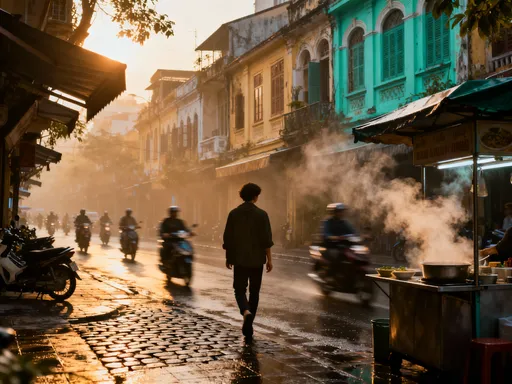
Step away from the main courtyard, and the true depth of Bodhnath reveals itself. Behind the grandeur of the stupa, a network of narrow alleys weaves through clusters of homes, workshops, and hidden shrines. These lanes are not designed for tourists—they were built for living. Here, the urban landscape transforms into something intimate, layered, and deeply human. A flight of worn stone steps leads to a rooftop tea stall where elderly men sip *chiya* and discuss the day’s news. Around the corner, a woman flattens dough for steaming momos in a cramped kitchen open to the street, the scent of garlic and ginger rising with the morning mist.
Artisans work in tiny storefronts, their hands moving with precision. Thangka painters sit cross-legged on low stools, brush in hand, meticulously filling in sacred images with mineral pigments. Their canvases depict deities, mandalas, and enlightened beings—each stroke guided by spiritual discipline as much as artistic skill. Nearby, tailors stitch ceremonial robes, while metalworkers shape bells and ritual implements. These crafts are not tourist souvenirs first; they are devotional objects, made for use in homes and temples across the Himalayan region. To watch them being created is to witness tradition not preserved behind glass, but practiced in real time.
Even the homes in these alleys reflect a quiet integration of the sacred and the everyday. Small shrines sit tucked beside doorways, adorned with butter lamps, marigolds, and prayer flags. Residents light incense each morning, bow their heads briefly, and continue with chores. Children walk to school wearing backpacks covered in cartoon characters, passing elders spinning hand-held prayer wheels. There is no contradiction here—no sense that modernity threatens tradition, or that faith must be hidden. Instead, religion is woven into the rhythm of ordinary life, not as an exception, but as its foundation.
Sacred Sounds and Urban Rhythm
One of the most defining features of Bodhnath is its soundscape—a constant, gentle hum that blends the spiritual with the urban. From sunrise to sunset, the air vibrates with chanting. Monasteries broadcast morning prayers through weathered speakers; monks’ voices rise and fall in cadence, syllables stretching into the sky. The metallic chime of bells rings out during rituals, sharp and clear, cutting through the murmur of conversation. Tibetan music—deep horns, resonant drums, and throaty vocal chants—drifts from open windows, adding texture to the atmosphere.
Yet, this sacred soundscape does not dominate. It coexists. The distant rumble of buses on Ring Road blends with the chatter of vendors calling out prices. Motorcycles weave through alleys, their engines sputtering briefly before fading. A radio plays Nepali pop music from a tea shop, harmonizing unexpectedly with the low drone of a mantra. There is no competition between noise and silence, chaos and calm. Instead, there is balance. The spiritual tones do not demand attention—they simply are, like the breeze or the scent of incense. They form a background layer that, over time, becomes part of the visitor’s internal rhythm.
This acoustic harmony reflects a deeper truth about Bodhnath: peace is not found in isolation, but in coexistence. Unlike quiet retreats tucked into remote mountains, this neighborhood thrives in the middle of a bustling city. Yet it maintains a sense of serenity not by escaping urban life, but by absorbing it. The chants do not drown out the city—they elevate it. The bells do not silence traffic—they sanctify movement. In this way, Bodhnath teaches a quiet lesson: spirituality need not be removed from daily life to be profound. It can live within it, enhancing the ordinary without rejecting the real.
Where Spirituality Meets Street Life
In Bodhnath, the sacred and the secular are not divided by walls or schedules. They share space, time, and even tables. It’s common to see a monk in maroon robes sitting at a sidewalk café, sipping a cup of coffee while reading a newspaper. Nearby, children chase each other around prayer wheels, their laughter ringing out as elderly pilgrims bow in silent devotion. A vendor sells both fresh fruit and ceremonial offerings—butter lamps, incense sticks, and prayer scarves—stacked side by side on a wooden cart. There is no tension in these contrasts; instead, there is harmony.
Commerce in Bodhnath is not separate from faith—it is an extension of it. Shops that sell prayer beads, thangkas, and ritual items are not just businesses; they support the spiritual life of the community. Families rely on these sales to sustain their livelihoods, just as pilgrims depend on them to practice their devotion. Even the small act of buying a butter lamp becomes part of a larger cycle of giving and receiving. The money exchanged is not merely transactional; it carries intention, often given as *dana*, or generosity, one of the core Buddhist virtues.
This blending shapes the neighborhood’s identity. Unlike places where religion is confined to specific hours or locations, in Bodhnath, devotion is a continuous thread. A woman walks home from the market with a bag of vegetables in one hand and a string of prayer beads in the other. A man pauses mid-conversation to spin a prayer wheel on his way to work. These gestures are small, almost invisible to the untrained eye, yet they reveal a culture where spirituality is not an event, but a way of being. The result is a community that feels grounded, connected, and deeply resilient—a place where faith isn’t performed, but lived.
Best Times and Ways to Experience Deeply
To truly appreciate Bodhnath, timing and approach matter. Early mornings offer the most profound experience. Between 5:30 and 7:30 a.m., the air is cool, the light soft, and the crowds thin. This is when pilgrims are most active, and the atmosphere feels most authentic. The scent of fresh incense fills the courtyards, and the sound of group chanting from monasteries resonates through the streets. Watching the sunrise over the stupa during this time is a moment of quiet awe—one that lingers long after the day begins.
Evenings bring their own magic. As the sun dips behind the rooftops, the stupa is illuminated, its golden spire glowing against the darkening sky. Butter lamps flicker to life inside the prayer halls, casting warm reflections on stone walls. Families gather for evening kora, walking slowly, talking softly. The pace slows, and the neighborhood exhales. For visitors, this is an ideal time to sit at a rooftop café with a cup of tea and simply observe—the flow of people, the rhythm of devotion, the quiet joy of community.
Festival seasons, especially Losar (Tibetan New Year) and Buddha Jayanti, transform Bodhnath into a vibrant celebration. The streets fill with colorful processions, masked cham dances, and extended prayer sessions. Monasteries open their inner courtyards to the public, and the air buzzes with energy. While these times attract more tourists, they also offer unparalleled access to living traditions. For those seeking depth, a guided walking tour led by a local resident can reveal hidden shrines, family-run workshops, and stories not found in guidebooks. The key is to move slowly, observe respectfully, and avoid treating the space as a spectacle.
Visitors should also be mindful of cultural norms. Walking the kora path in a clockwise direction shows respect. Refraining from loud conversation near prayer areas, dressing modestly, and asking permission before photographing people or rituals are small gestures that go a long way. Above all, the best way to engage with Bodhnath is with humility and openness—allowing the place to reveal itself, rather than seeking to capture or control the experience.
Why Bodhnath Changes How You See Cities
Bodhnath challenges conventional ideas about urban life. In an era where cities are often designed for efficiency, speed, and economic output, this neighborhood stands as a quiet alternative—one where community, meaning, and spiritual well-being are central. Here, architecture serves not just function, but feeling. Public space is not just for transit, but for gathering, praying, and connecting. The design of the area—circular pathways, open courtyards, elevated viewpoints—invites movement and reflection, not just consumption and commuting.
Contrast this with many modern cities, where people pass each other in silence, eyes down, headphones on. In those places, the soul often feels absent, replaced by schedules and screens. Bodhnath reminds us that cities can be more than machines for living—they can be vessels for meaning. Its model is not one of grand urban planning, but of organic growth rooted in shared values. The stupa is not a landmark; it is a center. The alleys are not just passageways; they are relationships. The sounds are not noise; they are prayers.
What can we learn from this? Perhaps that urban design should not only consider traffic flow and housing density, but also emotional resonance and communal well-being. Spaces that encourage walking, gathering, and quiet reflection foster deeper connections. Neighborhoods that integrate culture and spirituality into daily life create resilience, belonging, and continuity. Bodhnath does not offer a blueprint to copy, but an invitation to rethink—what if more cities were built not just for survival, but for soulfulness?
In the end, Bodhnath is more than a destination. It is a reminder that places can transform people. To walk its paths is to slow down, to listen, to notice. It is to remember that beneath the surface of any city, there is a pulse—if only we take the time to feel it. Travel, at its best, is not about checking off landmarks, but about opening ourselves to new ways of being. So go gently. Look closely. Let the quiet magic of Bodhnath remind you that even in the busiest corners of the world, the sacred still breathes—and it is waiting to be discovered.