Skyline Dreams and Hidden Corners: A Local’s Guide to Seeing Bucharest Differently
Bucharest isn’t just Romania’s capital—it’s a city of contrasts, where grand Austro-Hungarian facades stand beside gritty communist-era blocks and buzzing street art alleys. If you're looking to truly *see* it, not just walk through it, this guide unlocks the best views, both famous and secret. From rooftop sunsets to quiet park lookouts, discover how to experience Bucharest’s skyline and soul, one breathtaking perspective at a time. More than a list of photo spots, this is an invitation to slow down, look closely, and let the city reveal itself in layers—through light, texture, history, and the quiet rhythm of daily life. Whether you’re visiting for the first time or returning after years, Bucharest rewards those who see beyond the surface.
The First Glimpse: Arriving in Bucharest with Eyes Wide Open
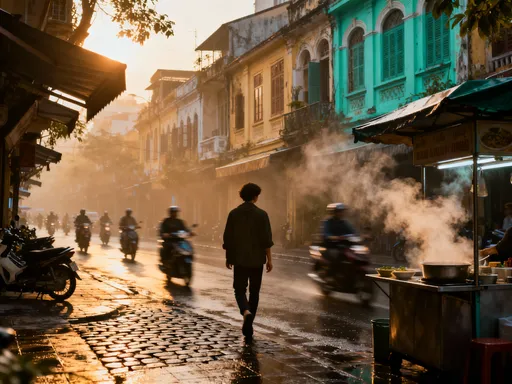
Entering Bucharest is like stepping into a living archive of resilience and reinvention. Unlike the curated elegance of many Western European capitals, this city unfolds in unfiltered layers—ornate 19th-century balconies draped in ivy sit across the street from stark concrete apartment blocks from the 1980s, while boulevards lined with linden trees open suddenly into bustling squares filled with outdoor cafés and street musicians. The first view of the city, whether from Henri Coandă International Airport or the Gara de Nord train station, sets the tone for a journey defined by contrast and character. As taxis and trams glide along wide avenues, visitors begin to sense the pulse of a capital that has weathered political upheavals, economic shifts, and urban transformations, yet continues to evolve with quiet determination.
What makes this first impression so powerful is not just the visual mix of architectural styles, but the sense of authenticity that permeates the cityscape. There’s no attempt to hide the scars of history; instead, they’re woven into the fabric of everyday life. A crumbling façade might be repurposed into a trendy design studio, while a Soviet-era housing complex could host a vibrant community garden on its ground floor. This blend of old and new, polished and raw, invites travelers to shift their expectations. Rather than seeking perfection, the experience of Bucharest lies in appreciating its complexity—its ability to carry multiple identities at once.
For those eager to capture this layered arrival, timing matters. Arriving in the late afternoon during spring or early autumn offers the best balance of soft natural light and active street life. The golden hour, just before sunset, bathes the city’s yellow stucco buildings in a warm glow, softening the edges of even the most utilitarian structures. Travelers on the airport shuttle or metro line M2 can catch particularly striking views as they cross the Dâmbovița River, where reflections of church domes and modern glass towers ripple in the water. The journey into the city center becomes its own visual prelude—a gentle introduction to Bucharest’s dynamic spirit.
Equally important is the mindset with which one arrives. Bucharest does not reveal itself all at once. It asks for patience, curiosity, and a willingness to look beyond the obvious. A cracked sidewalk might lead to a hidden courtyard covered in murals; a nondescript side street could open onto a quiet square where elderly residents play chess under chestnut trees. These moments of discovery are not accidental—they are the reward for travelers who resist the urge to rush and instead allow the city to unfold at its own pace. By embracing this approach from the very beginning, visitors position themselves not as passive observers, but as active participants in the story of Bucharest.
The Iconic Panorama: Where Postcards Come to Life
No skyline in Bucharest commands attention quite like the Palace of the Parliament. Rising with imposing symmetry from the southern edge of the city center, this monumental structure is the second-largest administrative building in the world by volume, surpassed only by the Pentagon. Its sheer scale—over one million square feet of floor space, 12 stories above ground, and an additional eight below—makes it a dominant presence in the city’s visual identity. Originally conceived during the Nicolae Ceaușescu regime as the House of the People, the building stands today as both a symbol of excess and a testament to architectural ambition. For visitors, it offers one of the most unforgettable skyline views in Eastern Europe.
The best way to appreciate the palace is from a distance, where its full silhouette can be taken in without being overwhelmed by its proximity. The elevated walkway in Izvor Park, located just across the street, provides an ideal vantage point. From here, the building appears framed by trees and open sky, its white marble façade glowing in the sunlight. At dusk, when the exterior lighting gradually comes on, the palace transforms into a luminous centerpiece, its neoclassical columns and grand staircases illuminated like a stage set. Photographers will find that late afternoon offers the most balanced exposure, with the sun casting long shadows that emphasize the building’s depth and texture.
Another exceptional viewpoint lies near the Romanian Athenaeum, especially when approaching from the north along Bulevardul Magheru. As the tree-lined avenue opens into Piața Academiei, the palace appears in the distance, perfectly aligned with the symmetrical layout of the boulevard. This optical corridor creates a striking visual effect, drawing the eye directly to the building’s central dome. The contrast between the elegant, Paris-inspired architecture of the Athenaeum and the monumental scale of the palace across the city adds a layer of historical narrative to the scene. It’s a reminder of Bucharest’s dual identity—cultured and cosmopolitan, yet shaped by political forces that left an indelible mark on its urban form.
While the palace is undeniably impressive, viewing it also invites reflection. Its construction required the demolition of a historic neighborhood, displacing thousands of residents—a fact that many locals still remember. Ethical tourism means acknowledging this complexity rather than treating the building solely as a backdrop for photographs. Respecting the site includes avoiding trespassing on restricted areas, following designated paths, and being mindful of security personnel. For those who wish to explore the interior, guided tours are available and offer insight into the building’s opulent halls, including the enormous Assembly Hall and the intricate mosaic corridors. These visits help contextualize the structure not just as a relic of the past, but as a functioning seat of government and a space of national significance.
Rooftop Culture: Bucharest’s Sky-High Social Scene
In the past decade, Bucharest has embraced rooftop culture with enthusiasm, transforming high-altitude spaces into vibrant social destinations. What began as a niche trend among boutique hotels and private clubs has become a citywide phenomenon, with rooftop bars and lounges now integral to the urban experience. These venues offer more than just cocktails and city views—they serve as elevated stages where locals and visitors gather to unwind, connect, and see the city from a new perspective. From the buzz of Friday night crowds to the calm of a Sunday morning coffee with a view, Bucharest’s rooftops capture the rhythm of contemporary urban life.
One of the most celebrated spots is the terrace at Upstairs Bar, located in the heart of the city. Perched atop a restored interwar building, it offers a 360-degree panorama that includes the spires of the Old Town, the modern skyline near Piața Victoriei, and the distant greenery of Herăstrău Park. The design of the space blends industrial elements with warm wood finishes, creating an atmosphere that is both stylish and inviting. As the sun sets, string lights flicker on, and the city below begins to sparkle, making it a favorite for both romantic evenings and casual meetups among friends. While reservations are recommended for prime hours, arriving during happy hour—typically between 6 and 8 p.m.—allows walk-ins to secure a good seat without the wait.
Other notable rooftops include Nomad Skybar, known for its minimalist design and panoramic glass railings that don’t obstruct the view, and The Roof Garden at the Radisson Blu, which features lush greenery and a more relaxed, garden-like ambiance. These spaces cater to different moods and preferences, from energetic nightlife to quiet contemplation. Many offer signature drinks that incorporate local flavors—think plum brandy cocktails, rosehip infusions, or mint lemonade made with honey from Transylvanian hives. Pairing a drink with a view becomes more than a pastime; it’s a sensory immersion in the city’s atmosphere.
What sets Bucharest’s rooftop scene apart is its accessibility. Unlike in some global cities where sky decks are exclusive or prohibitively expensive, many of these venues maintain reasonable prices and a welcoming vibe. This democratization of the skyline allows a broader range of people to enjoy elevated perspectives, reinforcing the idea that beauty and connection should not be reserved for the few. For travelers, visiting a rooftop is not just about taking photos—it’s about participating in a local ritual, sharing space with residents who see the city as both home and inspiration.
Green Lookouts: Parks That Frame the City
Beyond the rooftops and grand avenues, Bucharest’s parks offer some of the most serene and poetic vantage points. These green spaces are not merely places to rest—they are carefully composed landscapes that frame the city in unexpected ways. Among them, Herăstrău Park stands out as both a recreational haven and a visual treasure. Stretching along the northern edge of the city along the lake of the same name, it spans over 180 hectares and includes rolling hills, wooded paths, and picturesque bridges. Several elevated spots within the park provide natural overlooks, where the skyline emerges between tree branches or reflects perfectly in the still water at sunset.
One of the most rewarding walks begins at the entrance near the Dimitrie Gusti National Village Museum. As the path curves along the lake, it gradually rises on a gentle incline, culminating in a small observation point that looks south toward the city center. From here, the modern towers of northern Bucharest appear in the distance, softened by the haze of evening light. On clear days, the TV Tower at Alexandru Ioan Cuza Park is visible, its slender silhouette piercing the sky. The reflection of the buildings in the lake creates a mirror image that doubles the visual impact, offering photographers a rare chance to capture symmetry and depth.
Equally enchanting is Cișmigiu Gardens, located in the very heart of the city. Opened in 1847, it is Bucharest’s oldest public park and remains a favorite among locals for morning strolls and quiet conversations on shaded benches. The central pond, surrounded by weeping willows and swan-shaped paddle boats, becomes a natural canvas for atmospheric effects. On foggy mornings, especially in late autumn or early spring, the mist rises like smoke from the water, blurring the edges between land and sky. The surrounding buildings—government offices, historic hotels, and café terraces—appear as ghostly silhouettes, creating a dreamlike scene that feels worlds away from the city’s usual pace.
These green lookouts remind visitors that beauty in Bucharest is not confined to monuments or high-altitude decks. It exists in the quiet moments between movements, in the way light filters through leaves or water distorts a skyline. By incorporating park visits into their itinerary, travelers gain a more balanced and emotionally resonant experience—one that includes both grand vistas and intimate details. Whether sitting on a bench with a book or walking mindfully along a tree-lined path, the act of pausing in these spaces allows the city to reveal itself in softer, more personal ways.
Street-Level Magic: Finding Beauty in the Unexpected
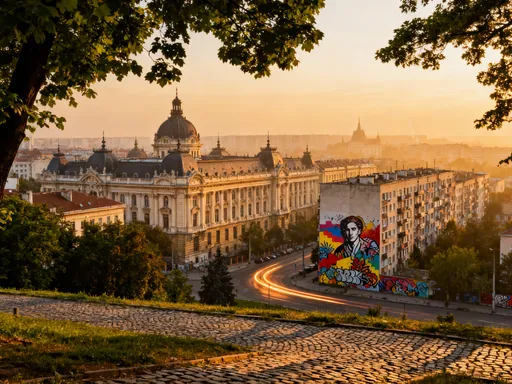
Some of the most memorable views in Bucharest are not found on maps or in guidebooks—they appear around corners, in alleyways, or through half-open gates. This is the magic of street-level exploration, where slowing down and paying attention reveals hidden compositions that feel almost accidental. In neighborhoods like Lipscani and the Civic Centre, where historic buildings stand shoulder to shoulder with repurposed warehouses and modern boutiques, the city’s visual poetry unfolds in details: a wrought-iron balcony with intricate scrollwork, a courtyard wall covered in hand-painted tiles, or a narrow passage where graffiti aligns perfectly with a distant church steeple.
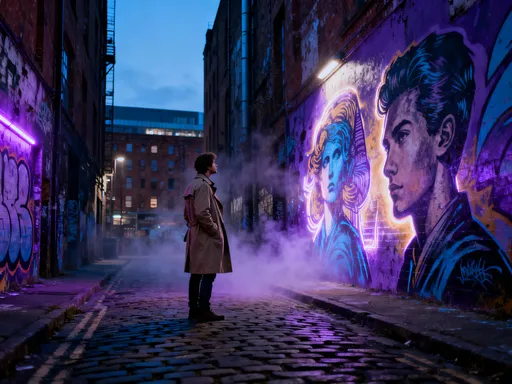
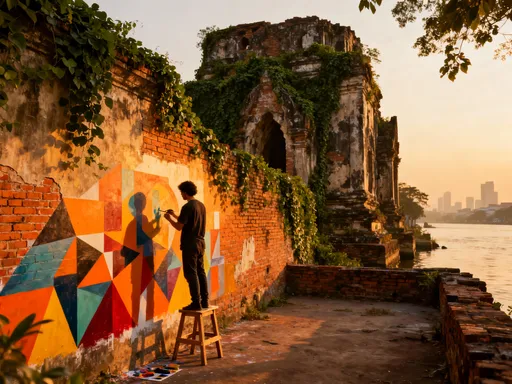
One such moment might occur on a quiet side street off Strada Smârdan, where a sudden opening between two buildings frames a perfect view of the Orthodox Patriarchal Cathedral’s golden dome, bathed in afternoon light. The alignment feels intentional, though it is the result of organic urban growth over decades. Another example can be found in the Fabrica district, where former industrial spaces have been transformed into creative hubs. A walk through these alleys reveals murals that span entire walls, each telling a story through color and form. The interplay of sunlight and shadow enhances the textures—peeling paint, exposed brick, fresh stencils—turning the streets into open-air galleries.
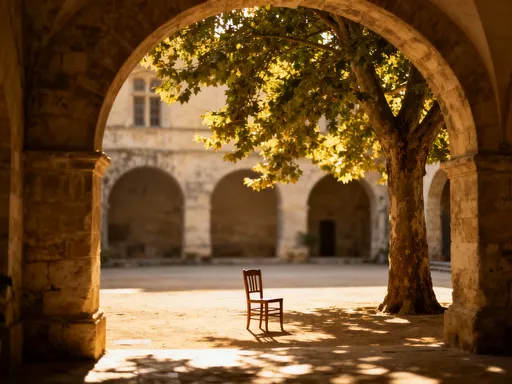
For travelers, the key to discovering these moments is presence. Instead of rushing from landmark to landmark, a more rewarding approach is to wander without a fixed destination, allowing curiosity to guide each turn. Carrying a camera or sketchbook can deepen the experience, encouraging closer observation. The late afternoon is particularly generous in this regard—when the sun slants low, it transforms ordinary façades into golden backdrops, highlights architectural details, and casts long, dramatic shadows that add depth to photographs. Even a simple brick wall can become extraordinary under the right light.
These micro-moments are not just visually satisfying—they connect the traveler to the soul of the city. They reflect Bucharest’s spirit of resilience and creativity, where beauty emerges not despite imperfection, but because of it. In a world that often prioritizes polished perfection, Bucharest offers a different lesson: that charm lies in the cracks, the contrasts, and the unexpected alignments that only reveal themselves to those who take the time to look.
The Golden Hours: Timing Your Visual Adventure
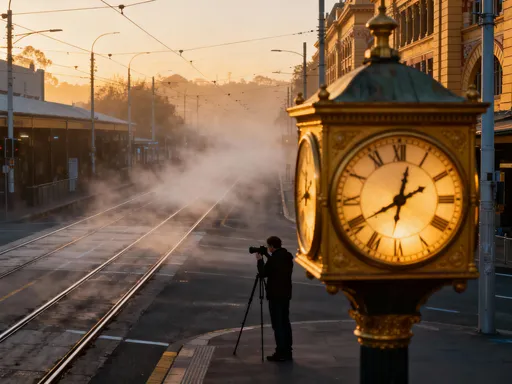
Light is the silent architect of Bucharest’s visual magic. The same street can appear stark and ordinary at noon, yet radiant and cinematic at sunrise. Understanding the rhythms of natural light is essential for anyone seeking to experience the city at its most beautiful. The golden hour—just after sunrise and before sunset—transforms the city’s palette, bathing its yellow and ochre buildings in a warm, honeyed glow. During this time, shadows lengthen, textures become more pronounced, and the air itself seems to shimmer with possibility. Blue hour, the period just after sunset when the sky turns deep indigo and city lights begin to flicker on, offers a different kind of beauty, one defined by contrast and atmosphere.
For sunrise views, University Square is an ideal starting point. As the sun rises behind the neo-Romanian façade of the Central University Library, the building’s intricate carvings are illuminated from the side, creating a play of light and shadow that reveals every detail. The square is usually quiet at this hour, allowing for unobstructed photography and a sense of solitude. By contrast, blue hour is best experienced around Piața Romană, where the convergence of major boulevards creates a dynamic streetscape. As streetlights, café signs, and passing trams light up the scene, the city takes on a cinematic quality, perfect for long-exposure shots or simply standing still and absorbing the moment.
Seasonal variations also affect lighting conditions. In summer, golden hour occurs later, often between 8:30 and 9:30 p.m., making evening walks both pleasant and visually rewarding. Winter days are shorter, but the low angle of the sun can create even more dramatic effects, especially when it glints off frost-covered windows or snow-dusted rooftops. Overcast days, often seen as a setback, can actually enhance mood and contrast, diffusing light evenly and reducing harsh highlights—ideal for capturing the textures of weathered walls or the soft glow of indoor lighting through café windows.
To make the most of these moments, a few practical tips help. Smartphone cameras, when used with manual settings or portrait mode, can produce excellent results. Cleaning the lens, stabilizing the phone on a surface, and avoiding digital zoom improve image quality. But beyond technical advice, the most important tool is patience. Waiting for the right light, returning to a location at different times, and being present in the moment allow travelers to witness Bucharest not just as a destination, but as a living, breathing entity shaped by time and light.
Looking Beyond: How to Carry Bucharest’s Views With You
The most lasting souvenirs from a journey are not always physical. While photographs fill memory cards, the true essence of a place often resides in the impressions that linger—the way sunlight fell across a courtyard, the sound of church bells echoing over rooftops, the quiet conversation over coffee in a hidden garden. Bucharest, with its layered history and evolving identity, invites travelers to move beyond snapshots and cultivate a deeper, more personal connection. The goal is not just to see the city, but to carry its spirit with you long after you’ve left.
One way to do this is through mindful observation. Instead of rushing to capture every landmark, take moments to pause, breathe, and absorb. Notice the pattern of tiles on a wall, the rhythm of footsteps on cobblestones, the way locals greet each other in the morning. These sensory details form the foundation of memory. Journaling, even briefly, can help solidify these impressions. A few sentences describing a sunset over Herăstrău Lake or the taste of a warm cornuleț bought from a street vendor become anchors for recollection.
Sketching, even for those who don’t consider themselves artists, is another powerful tool. A simple line drawing of a building’s façade or a park bench scene captures not just the visual, but the act of looking itself. It slows time and deepens attention, creating a more intimate relationship with the environment. For others, collecting small, meaningful tokens—a metro ticket, a pressed leaf from a park, a business card from a favorite café—can serve as tactile reminders of the journey.
Ultimately, seeing Bucharest deeply means engaging with its rhythm, its contrasts, and its quiet moments of beauty. It means understanding that a city’s soul is not found in a single skyline view, but in the accumulation of small, authentic experiences. By approaching the city with curiosity, respect, and an open heart, travelers don’t just witness Bucharest—they become part of its ongoing story. And in doing so, they carry home not just memories, but a renewed way of seeing the world.