Step into the Soul of Hanoi: Where Every Street Tells a Story
Hanoi isn’t just a city — it’s a living, breathing rhythm you feel in your footsteps. Walking through its streets, I discovered how public spaces shape the soul of this vibrant capital. From morning tai chi in leafy parks to chaotic roundabouts humming with life, Hanoi’s true essence unfolds on foot. You don’t just see the city — you experience it, moment by moment, pulse by pulse. This is a place where sidewalks tell stories, markets sing with conversation, and every alley invites quiet discovery. To walk in Hanoi is not to pass through, but to become part of its daily dance.
The Pulse of Public Life: Why Hanoi Walks Differently
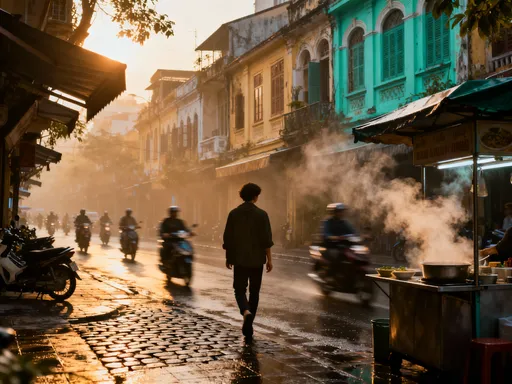
In most global cities, walking is a means to an end — a way to get from home to work, from café to shop. But in Hanoi, walking is participation. It’s not merely movement; it’s immersion in the city’s heartbeat. The sidewalks are never just sidewalks. They are shared stages where street vendors arrange baskets of lychees, elderly women fold lotus flowers for offerings, and children chase each other between motorbikes parked at odd angles. There is no strict division between public and private, between path and place. This fluidity defines Hanoi’s urban soul.
What makes Hanoi’s pedestrian culture unique is its deep-rooted sense of communal space. Unlike cities designed around cars or strict zoning, Hanoi evolved organically, shaped by generations of shared living. The narrow streets of the Old Quarter, some barely wide enough for two scooters to pass, were once trade lanes for ancient guilds. Today, they remain arteries of social life. Walking here means learning to move with others, not around them. There’s a rhythm — subtle, unspoken — that guides how people navigate space. A nod, a smile, a slight shift in stance can signal intent more clearly than any traffic sign.
This culture reflects broader Vietnamese values: community over individualism, adaptability over rigidity. Locals don’t expect perfect order; they expect cooperation. A vendor’s cart may block part of the path, but others step aside without complaint. A group of friends sits on plastic stools drinking tea by the roadside, and pedestrians weave around them like water around stones. It’s not disorder — it’s a different kind of order, one built on mutual respect and daily familiarity. For visitors, embracing this rhythm means letting go of the need for predictability and opening up to the beauty of spontaneity.
Morning Rituals in Hidden Parks: Nature’s Quiet Corners
As dawn breaks over Hanoi, the city stirs not with horns or engines, but with the soft rustle of leaves and the gentle stretch of limbs. In quiet green pockets scattered across the capital, residents begin their days with rituals that blend exercise, meditation, and social connection. Lenin Park, nestled near the city center, comes alive with the slow, flowing movements of tai chi practitioners. Men and women, many in their 60s and 70s, move in unison, arms rising like wings, feet gliding over dew-dampened grass. The air carries the faint scent of frangipani and the sound of deep, measured breathing.
Near the National Assembly building, the garden grounds offer another sanctuary. Here, retirees gather not only to exercise but to play chess, read poetry aloud, or simply sit in silence, sipping hot tea from thermoses. Small groups practice qigong, their hands tracing invisible circles in the air, aligning breath with motion. Others engage in light calisthenics — squats, arm circles, gentle jumps — not for fitness alone, but as a daily offering to health and longevity. These routines are not hobbies; they are traditions passed down through families, part of a cultural understanding that well-being begins with rhythm and routine.
What makes these parks so vital is their role as emotional anchors. In a city of over eight million people, where streets buzz with relentless energy, these green spaces provide balance. They are places where time slows, where conversation flows softly, where one can feel both connected and at peace. For visitors, joining a morning session — even just observing — offers a rare glimpse into the quieter side of Hanoi’s soul. It’s a reminder that urban life need not be frantic, that stillness and movement can coexist, and that nature, however small, remains sacred.
Around the Roundabouts: Navigating Hanoi’s Iconic Intersections
If Hanoi has a signature experience, it is crossing the street. At major intersections like Cát Linh or Kim Mã, the flow of motorbikes seems endless — a roaring, weaving river of steel and sound. To the untrained eye, it appears chaotic, even dangerous. Yet, locals step off the curb without hesitation, moving steadily into the current, and somehow emerge unscathed on the other side. How? The answer lies not in speed or luck, but in rhythm and trust.
Hanoi’s traffic operates on an unwritten code: constant motion and mutual awareness. Unlike cities where vehicles stop for pedestrians, here, both parties adjust in real time. A pedestrian walks with purpose, maintaining a steady pace, never stopping or darting. Drivers, in turn, slow, swerve slightly, or pause just enough to let the walker pass. It’s a dance of micro-adjustments, guided by eye contact, body language, and an unspoken understanding that everyone is trying to get where they need to go. There is no aggression, only adaptation.
For visitors, the key is not to hesitate. Standing at the edge, frozen by fear, sends the wrong signal. But stepping forward with calm confidence — even if your heart races — tells drivers you are part of the flow. Over time, this act becomes symbolic of the city itself: life in Hanoi is not about control, but about moving with the current, trusting that others will make space. Major roundabouts, often seen as obstacles, become lessons in patience, presence, and collective harmony. They are not just intersections of roads, but intersections of lives.
Street Markets as Social Hubs: More Than Just Shopping
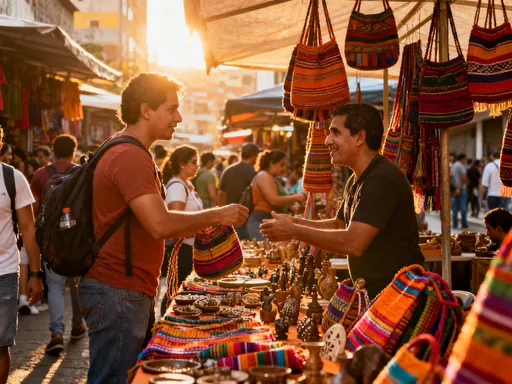
Markets in Hanoi are not merely places to buy goods — they are the city’s living rooms. In places like Đồng Xuân Market, the largest covered market in the Old Quarter, commerce blends seamlessly with conversation. The air is thick with the smell of dried shrimp, ripe mango, and sizzling bánh mì. Vendors call out prices in melodic tones, bargaining unfolds like friendly debate, and neighbors pause to exchange news between stalls. A woman buys fresh herbs, then lingers to ask after her seller’s granddaughter. Two men haggle over a bamboo fan, then laugh and share a cigarette. These moments are not interruptions to business — they are the heart of it.
Hàng Da Market, slightly more modern but no less vibrant, offers a different rhythm. Here, textiles, clothing, and household goods fill narrow aisles, but the social fabric remains strong. Shopkeepers sit on low stools, sipping tea, greeting passersby by name. Customers come not just to shop, but to connect. A young mother brings her child to visit the scarf vendor who once held her at birth. An elderly man buys a pair of slippers and stays to discuss the weather, politics, and last night’s football match. These markets are not transactional spaces — they are relational ones.
The sensory richness of these environments is unforgettable. The colors of silk fabrics flutter like flags in the breeze. The clatter of scales and cash registers forms a steady urban soundtrack. The warmth of steamed buns rises from food carts tucked between shops. For visitors, wandering through these markets is an invitation to slow down, to engage, to listen. It’s not about what you buy, but what you experience — the hum of community, the pulse of daily life, the quiet joy of being seen and acknowledged in a crowded place.
Lakeside Living: West Lake and Hoàn Kiếm as Urban Anchors
Water has always held spiritual and practical significance in Vietnamese culture, and in Hanoi, two lakes stand as emotional and physical anchors: Hoàn Kiếm Lake in the city center and West Lake on its northern edge. Each offers a different rhythm, a different kind of connection to the city and to oneself.
Hoàn Kiếm, or “Lake of the Returned Sword,” is the symbolic heart of Hanoi. Encircled by a tree-lined walking path, it draws families, couples, and solo wanderers at all hours. In the early morning, the air is cool, and the lake is still, its surface reflecting the soft pink of sunrise. Joggers pass quietly, their footsteps muffled by fallen leaves. By evening, the atmosphere shifts. Street performers play traditional instruments near the red Huc Bridge. Children fly kites shaped like dragons. Couples sit on benches, sharing sweet iced coffee. The temple on the island glows with lantern light, a quiet beacon in the urban glow.
West Lake, larger and more relaxed, offers a different kind of serenity. Its winding roads and shaded paths attract those seeking a slower pace. Cyclists ride in pairs, their bells ringing softly. Joggers pause to stretch under banyan trees. Couples walk hand in hand, some stopping at lakeside cafés to sip coconut coffee as the sun dips below the horizon. Unlike the symbolic intensity of Hoàn Kiếm, West Lake feels more intimate, more personal — a place to reflect, to breathe, to simply be.
Both lakes serve as vital lungs for the city, but they also fulfill a deeper need: they are places of gathering and release. Locals come here not just to exercise, but to mark time — to celebrate, to mourn, to dream. For visitors, a lakeside walk is not just scenic — it’s grounding. It offers a chance to step outside the rush of the streets and reconnect with the quiet pulse of life.
From Alleyways to Avenues: The Architecture of Connection
Hanoi’s urban fabric is a tapestry of contrasts — narrow alleys opening into grand plazas, colonial villas standing beside modern apartments, bustling markets giving way to silent courtyards. This mix is not accidental; it reflects a city shaped by history, adaptation, and human scale. The architecture here doesn’t just house people — it shapes how they interact.
In the Old Quarter, the famous “36 streets” each once specialized in a single craft — silk, paper, herbs, lanterns. Though commerce has evolved, the intimacy of these lanes remains. Buildings lean slightly toward each other, their upper floors almost touching, creating shaded tunnels where sunlight filters in patches. Doors open directly onto the street, blurring the line between inside and outside. A family eats dinner on plastic stools by the curb. A grandmother sweeps her doorstep while chatting with a neighbor across the way. These spaces encourage spontaneity — a smile, a shared joke, a cup of tea offered to a passerby.
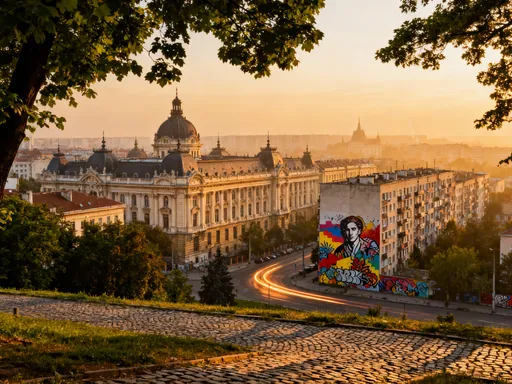
Contrast this with the wide boulevards and open squares left by French colonial influence. Tree-lined avenues like Trần Hưng Đạo or Lê Duẩn offer space, light, and a sense of grandeur. Public squares near government buildings provide room for gatherings, festivals, and national celebrations. Here, the city feels more formal, more structured. Yet even in these spaces, life finds a way to soften the edges. Couples picnic on the grass. Children fly kites. Elderly men play shuttlecock near fountains.
The genius of Hanoi’s urban design — whether planned or organic — is that it fosters connection at every scale. Narrow alleys create intimacy; wide avenues offer freedom. Both are necessary. For visitors, walking through these layers is like reading the city’s biography. Each turn reveals another chapter — of resilience, of tradition, of quiet joy.
Walking with Purpose: How to Experience Hanoi Like a Local
To truly know Hanoi, you must walk — not as a tourist rushing to check sights off a list, but as a guest moving with the city’s rhythm. The best times to walk are early morning, when the streets are cool and the markets are just waking, or late afternoon into evening, when families emerge for strolls and street food vendors light their grills. Avoid midday if possible, when the sun is high and the city slows under heat.
Wear comfortable shoes — the cobblestones are uneven, and the distances add up. Dress modestly and practically; lightweight, breathable clothing works best. Carry a small bottle of water and a light scarf — useful for sun protection or covering shoulders when entering temples. Most importantly, move slowly. Let yourself pause. Watch how people interact. Notice the details: the way a vendor arranges her fruit, the sound of a bicycle bell, the scent of grilled pork rising from a roadside stall.
Learn to read social cues. A smile goes a long way. A simple “xin chào” (hello) can open a conversation. If someone invites you to sit for coffee, accept if you can — it’s a gesture of warmth, not obligation. When crossing streets, walk steadily and predictably. Don’t run or stop suddenly. Trust the flow. When in markets, bargain gently — not to win, but to engage. And always show respect: remove shoes when entering homes or temples, avoid loud voices in quiet spaces, and never point your feet at people or altars.
Take breaks. Sit at a sidewalk café with a glass of iced lemon tea. Order a bowl of pho at a family-run shop where the grandmother stirs the broth. Let the city unfold around you. These moments of stillness are not wasted time — they are where understanding begins. Walking in Hanoi is not about covering ground. It’s about opening your senses, your heart, and your mind to the quiet poetry of everyday life.
The City That Moves With You
Hanoi is not a city you observe from a distance. It is a city you join. Its streets, parks, markets, and lakes are not just places to visit — they are invitations to participate. To walk in Hanoi is to move with its rhythm, to feel its pulse, to become part of its story, even if only for a few days. This is a city that rewards patience, presence, and openness. It asks not that you understand everything, but that you be willing to experience it — fully, gently, and with respect.
In a world where travel often means rushing from one landmark to the next, Hanoi offers a different path. It teaches that the deepest connections are not found in grand monuments, but in quiet moments — a shared smile, a steaming cup of tea, a walk around a lake at dusk. Its public spaces are not just functional; they are sacred in their own way — places where community is built, where life is lived, where belonging is possible, even for a stranger.
So when you come to Hanoi, leave the map behind — at least for a while. Step off the main roads. Follow the sound of laughter. Let the city guide you. Walk not to see, but to feel. Walk not as a guest, but as a participant. And in the end, you may find that Hanoi doesn’t just stay in your memory — it becomes part of you.