You Won’t Believe These Hidden Festival Gems in Jaipur
Jaipur isn’t just about palaces and pink walls—its soul pulses during festivals most travelers never see. I stumbled upon a side of this city that’s alive with color, rhythm, and raw tradition, far from the tourist trails. Think temple drums at midnight, secret processions, and rituals unchanged for centuries. If you’ve only seen Jaipur through a guidebook, you’ve missed the magic. Let me take you where few go—into the heart of its untold festival culture.
Beyond the Guidebooks: Jaipur’s Unseen Festival Spirit
Most visitors to Jaipur follow a familiar path—Amber Fort at sunrise, Hawa Mahal from the street, a quick stop at Jantar Mantar. These landmarks are undeniably grand, but they offer only a surface view of the city’s soul. The deeper rhythm of Jaipur lives not in ticketed attractions, but in the quiet courtyards, neighborhood temples, and family homes where festivals unfold with little fanfare and immense meaning. These are the moments when tradition breathes, when generations gather not for performance, but for participation.
Local festivals in Jaipur provide a cultural depth that no museum exhibit or guided tour can replicate. While tourists snap photos at City Palace, just a few lanes away, women are preparing turmeric paste for sacred rituals, children are stringing marigolds for home altars, and elders are reciting prayers passed down through decades. These celebrations are not staged for outsiders; they are lived, intimate, and rooted in daily life. The authenticity here is palpable—there is no separation between the sacred and the ordinary, between celebration and routine.
What makes these moments so powerful is their lack of spectacle. Unlike the polished events designed for cameras, these festivals thrive on sincerity. A grandmother lighting a diya at dusk, a group of neighbors chanting together, a young girl carrying a handmade idol to temple—these are acts of devotion, not display. For the traveler willing to look beyond the guidebook, this is where connection begins. It’s not about seeing more, but about feeling more. And in Jaipur, that feeling is woven into the fabric of its seasonal rhythms.
The Festival of Lights, Locally Lived: Diwali in Jaipur’s Old Quarter
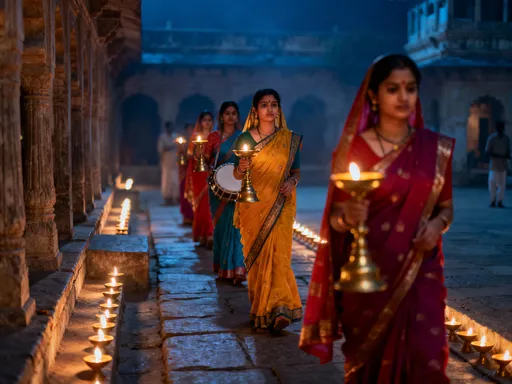
Diwali in Jaipur is not just a festival—it is a transformation of the city’s spirit. While cities across India light up with fireworks and electric displays, in the old quarter of Jaipur, Diwali remains deeply personal and profoundly spiritual. As evening falls, the narrow lanes of Johari Bazar, Chandpole, and Nahargarh come alive with the soft glow of hand-filled oil lamps. Hundreds of diyas line doorsteps, windowsills, and temple steps, their flickering light casting dancing shadows on centuries-old haveli walls.
Preparations begin days in advance. Families clean their homes not just for beauty, but as a symbolic welcome for Lakshmi, the goddess of prosperity. Women prepare sweets like ghewar and malpua, their kitchens fragrant with cardamom and ghee. Children help paint rangoli designs at entrances—geometric patterns in vibrant colors made from rice flour, flower petals, and colored sand. Each design is unique, a fleeting work of art meant to bring good fortune and joy.
On the night of Diwali, the atmosphere is electric yet intimate. Temple bells ring continuously, their sound mingling with the distant crackle of sparklers. Families gather for puja, offering prayers with incense, flowers, and lamps. There is no rush, no agenda—just presence. Neighbors exchange sweets, sharing laughter and stories. In these moments, the city feels like a village, bound by shared faith and tradition.
What stands out most is the absence of commercialization. There are no branded Diwali sales or mass-produced decorations here. Gifts are handmade, greetings are heartfelt, and celebrations are measured not by extravagance but by devotion. For a visitor, experiencing Diwali in this way is not just beautiful—it’s humbling. It reminds us that the brightest lights are not the ones in the sky, but the ones kindled in the heart.
Gangaur: When Women Lead the Celebration
Every spring, as the heat begins to rise and mustard fields turn golden across Rajasthan, Jaipur prepares for Gangaur—a festival dedicated to marital harmony and the divine feminine. Celebrated primarily by women, Gangaur honors Gauri, a form of Parvati, and her union with Lord Shiva. For weeks, households become workshops where women craft delicate clay idols of the goddess, adorning them with intricate jewelry, mirror work, and bright fabrics.
The festival’s true magic unfolds during the processions. On the final day, women dress in their finest traditional attire—colorful lehengas, silver jewelry, and red sindoor in their hair partings. Carrying the idols on their heads, they walk in groups from local temples through the old city, singing devotional songs that have been passed down through generations. The air fills with the sound of dholaks, the scent of roses, and the rustle of silk.
What makes Gangaur so special is its quiet strength. Unlike larger, more public festivals, Gangaur is not about spectacle. It is a celebration of patience, devotion, and community. Women of all ages participate—young brides praying for a happy marriage, mothers seeking blessings for their daughters, elders remembering decades of tradition. The festival is deeply personal, yet it binds the community together in shared purpose.
In a world where many cultural events are diluted for tourism, Gangaur remains largely untouched. You won’t find large crowds of foreigners here, nor commercial stalls selling souvenirs. The festival is guarded with care, not out of exclusion, but out of respect. For those who are welcomed to observe, it is a rare privilege—a glimpse into a world where faith, femininity, and tradition walk hand in hand through the streets of Jaipur.
Camel Festival? No—The Real Magic Is in Kajli Teej
While many tourists flock to Pushkar for the famous Camel Festival, those seeking a deeper cultural experience should turn their attention to Kajli Teej in Jaipur. Held during the monsoon season, Kajli Teej is a celebration of renewal, fertility, and the bond between nature and human life. It is a time when the city slows down, when women pause from daily routines to honor the rhythm of the earth.
The festival is marked by fasting, prayer, and song. Married women observe a day-long fast for the well-being of their husbands, while unmarried girls pray for a good match. But beyond the rituals, Kajli Teej is a sensory celebration. In courtyards and rooftops, women gather to sing traditional folk songs—melancholic yet joyful ballads that speak of separation, longing, and reunion. These songs, often accompanied by the harmonium and dholak, carry the weight of centuries.
One of the most striking symbols of Kajli Teej is the color green. Women wear green saris or lehengas, symbolizing growth, hope, and the lushness of the monsoon. Homes are decorated with fresh mango leaves and neem branches, believed to purify the air and bring good health. The scent of wet earth after the first rains mixes with the aroma of incense and turmeric, creating a fragrance that is uniquely Rajasthani.
Kajli Teej is deeply tied to agriculture, a reminder that Jaipur’s culture is rooted in the land. The festival marks the beginning of the sowing season, a time of anticipation and gratitude. For the modern traveler, it offers a rare opportunity to witness a celebration that is not about entertainment, but about harmony—with nature, with family, with tradition. It is quiet, reflective, and profoundly moving.
How to Find These Festivals Without Intruding
Discovering these hidden festivals requires more than a Google search—it demands curiosity, patience, and respect. The best way to learn about local events is through personal connections. Begin by talking to shopkeepers, chai wallahs, or rickshaw drivers in the old city. A simple “Kya aaj koi tyohar hai?” (Is there a festival today?) can open doors to unexpected invitations. Many festivals are not widely advertised, but word spreads quickly in neighborhoods.
Another reliable method is to check notice boards outside local temples. These often list upcoming pujas, processions, and community gatherings. Some temples even offer free booklets or schedules during festival seasons. For a more structured approach, consider hiring a local guide from a community-based tourism initiative. These guides are not only knowledgeable but deeply connected to their neighborhoods, offering access with cultural sensitivity.
When attending any festival, the key is respectful observation. Dress modestly—avoid shorts or sleeveless tops. Women may choose to cover their heads with a dupatta when entering religious spaces. Always ask before taking photographs, especially of individuals or private rituals. A smile and a gesture can go a long way in seeking permission. Remember, you are a guest in someone’s sacred moment.
Timing is also crucial. Most festivals follow the lunar calendar, so dates change each year. Planning your visit around major Hindu months like Shravan, Bhadrapad, or Kartik increases your chances of encountering authentic celebrations. But even if you miss a major event, smaller neighborhood observances often happen daily. The best experiences come not from schedules, but from being present and open to what unfolds.
Why These Moments Transform Travel
Travel is often measured in sights seen and photos taken. But the most lasting memories are not of monuments, but of moments—of shared laughter, unexpected kindness, or silent reverence in a candlelit courtyard. Participating in Jaipur’s lesser-known festivals does more than enrich a trip; it changes the traveler. It shifts the focus from consumption to connection, from observation to belonging.
I remember standing in a small temple courtyard during Gangaur, unsure of the words to the song but moved by the women singing around me. One of them handed me a flower to place at the goddess’s feet. I fumbled, nervous, but she smiled and guided my hand. That small gesture—simple, human, unscripted—stayed with me long after I left Jaipur. It wasn’t about understanding every ritual, but about being welcomed into one.
These experiences build empathy. They remind us that despite different languages, clothes, or customs, people everywhere celebrate love, hope, and continuity in their own ways. When you witness a mother lighting a diya for her child’s future, or hear a grandmother’s voice trembling with devotion, you see not “the other,” but yourself reflected in another life.
In an age of fast travel and curated itineraries, such moments are rare. They require slowing down, listening, and being willing to feel uncomfortable at times. But that discomfort is part of the gift—it means you are truly engaging, not just passing through. Mindful travel is not about ticking boxes; it’s about opening hearts. And in Jaipur’s hidden festivals, that heart is beating strong.
Planning Your Own Offbeat Festival Journey
Creating a meaningful festival experience in Jaipur begins with preparation, but not the kind that fills a spreadsheet. Start by researching festival dates using reliable cultural calendars or websites maintained by Rajasthan’s tourism board. Focus on lesser-known events like Kajli Teej, Gangaur, or local temple anniversaries. These are often more accessible and authentic than large-scale public festivals.
Accommodation plays a crucial role. Instead of luxury hotels, consider staying in a heritage homestay or a guesthouse in the old city. These places often have hosts who are deeply connected to the community and may invite you to join family celebrations. Waking up to the sound of temple bells and the smell of morning offerings can be the start of an unforgettable day.
Learn a few basic Hindi phrases—“Namaste,” “Dhanyavaad” (thank you), “May I join?”—not just for convenience, but as a sign of respect. Even broken words spoken with sincerity are met with warmth. Carry a small notebook to jot down names, songs, or moments that move you. These notes become more valuable than any souvenir.
Stay flexible. Festivals may start late, change routes, or happen spontaneously. A procession you hoped to see might be postponed; a puja might begin earlier than expected. Instead of frustration, treat these moments as part of the journey. Some of the best experiences—like joining a family for post-Diwali breakfast or helping string flowers for a temple—happen by accident.
Finally, go with an open heart, not a checklist. The goal is not to document everything, but to be present in anything. Let the colors, sounds, and silences of Jaipur’s festivals wash over you. Let yourself be surprised. Because the true magic of travel isn’t in seeing the world—it’s in letting the world see you, and change you.
Jaipur’s true rhythm beats not in its forts, but in the quiet joy of its people’s celebrations. By stepping off the map, you don’t just witness culture—you become part of it. These hidden festivals aren’t just events; they’re invitations to belong, even if just for a moment.