Chasing Light in Kumasi’s Wild Heart: Nature’s Perfect Frame
Have you ever stood somewhere so alive, your camera can’t keep up? Kumasi, Ghana’s cultural gem, hides wild, green secrets where nature writes poetry. From misty rainforests to serene lagoons, every turn offers a postcard moment. I’ve walked these paths and captured the magic — not just in photos, but in soul. This is where adventure meets stillness, and every shot tells a story. Far from the crowded tourist trails, Kumasi presents a quieter, greener narrative — one that unfolds in soft light, rustling leaves, and the quiet dignity of ancient trees. For those who seek beauty not in spectacle, but in subtlety, this city and its surrounding wilderness offer a perfect frame.
Why Kumasi is a Photographer’s Hidden Playground
Kumasi is often celebrated as the cultural heart of Ghana, home to vibrant markets, storied traditions, and the majestic heritage of the Asante Kingdom. Yet beyond its historical richness lies a lesser-known truth: this city is nestled within one of West Africa’s most biodiverse regions. Just a short journey from urban streets, the landscape transforms into a mosaic of rainforests, freshwater bodies, and rolling hills. For photographers, this proximity to untouched nature — without the need for days of travel — makes Kumasi a rare find. Unlike more commercialized destinations, it offers authenticity, accessibility, and a sense of discovery that feels personal rather than performative.
What sets Kumasi apart is its invitation to practice what might be called “green photography” — the art of capturing not just scenic views, but entire ecosystems in motion. Here, photography becomes less about posing and more about presence. It’s about noticing how sunlight filters through layered canopies, how birds respond to morning calls, and how water reflects not just the sky, but the life around it. The region’s biodiversity supports rich visual storytelling, from the texture of moss-covered bark to the sudden flash of a butterfly’s wings. These moments don’t demand grand gestures; they reward patience and observation.
Moreover, Kumasi’s infrastructure supports the thoughtful traveler. Roads are passable, local guides are knowledgeable, and accommodations range from modest guesthouses to eco-lodges that blend into the landscape. This balance of convenience and wilderness allows photographers to focus on their craft rather than logistics. Whether you’re an amateur with a smartphone or a seasoned professional with a full kit, the environment responds with generosity. And because tourism here is still developing, there’s a sense of privilege — of being among the first to document places that remain largely unseen by the outside world.
Bosomtwe Lake: A Reflective Wonderland
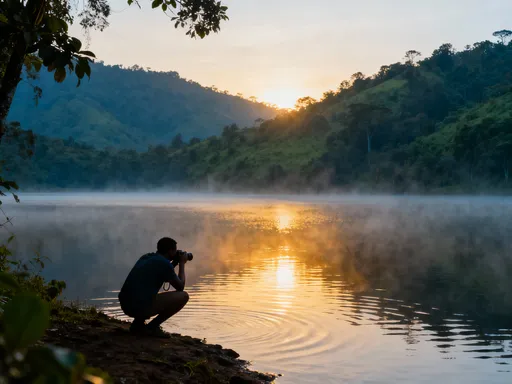
Lake Bosomtwe stands as one of West Africa’s most remarkable natural wonders — a rare example of a lake formed by a meteorite impact over a million years ago. Nestled within a crater and surrounded by lush green hills, the lake is a place of stillness and reflection, both literally and metaphorically. Its calm waters act as a mirror, doubling the sky, the forest edge, and the occasional canoe gliding silently across the surface. For photographers, this creates endless opportunities for symmetry, balance, and ethereal compositions that feel almost dreamlike.
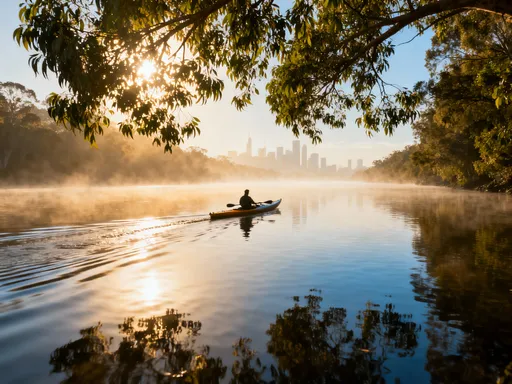
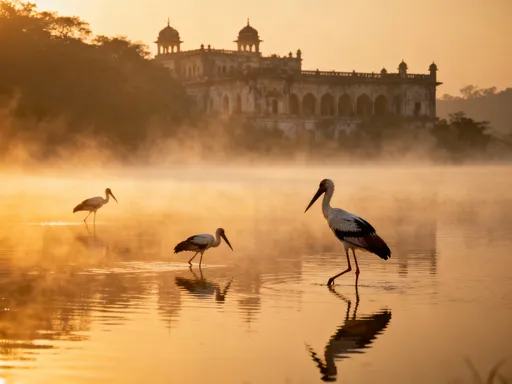
The best light arrives in the early morning, when mist rises like breath from the water and the sun casts a soft gold across the horizon. This is the moment when the lake feels most alive, yet undisturbed. Fishermen in wooden canoes begin their day, their silhouettes cutting clean lines against the glowing water. Capturing these scenes requires quiet movement and respect — approaching too closely can disrupt both the peace and the shot. A telephoto lens allows for intimate details without intrusion, preserving the authenticity of the moment.
Golden hour in the late afternoon offers another dimension, with warm light bathing the hills and creating long shadows that stretch across the shoreline. During the rainy season, the landscape becomes even more vivid — greens deepen, the air clears after showers, and clouds move dramatically across the sky, offering dynamic backdrops. A polarizing filter can help reduce glare on the water’s surface, enhancing the clarity of reflections and bringing out the rich contrast between land and lake.
Visitors are also welcomed by local communities around the lake, many of whom maintain traditional lifestyles tied to the water. While photographing people, it’s essential to ask permission and engage with kindness. A smile, a brief conversation, and a moment of connection often result in more meaningful images than any candid shot could provide. Bosomtwe is not just a location; it’s a living landscape shaped by both nature and culture — a truth that deserves to be honored through the lens.
Kumasi Zoo & Botanical Garden: Controlled Wildness
The Kumasi Zoological Garden and Botanical Garden offers a different kind of photographic experience — one where nature is curated, yet still vibrant. While not a wilderness reserve, the site houses a surprising diversity of plant and animal life within a well-maintained 20-hectare space. Towering mahogany and silk cotton trees provide dense shade, while winding paths lead past enclosures that are increasingly designed with animal welfare in mind. For photographers, this space presents a controlled environment ideal for practicing technique, especially in macro and portrait photography.
The interplay of light and foliage here creates rich textures and patterns. Sunlight filters through the canopy in dappled patches, illuminating spider webs, dew-covered leaves, and the intricate scales of reptiles on display. These details invite close-up work, where a macro lens can reveal the hidden beauty of a chameleon’s eye or the delicate veins of a tropical flower. The botanical collection includes orchids, ferns, and medicinal plants, each offering unique color contrasts and structural forms that respond well to careful framing.
Photographing animals requires patience and sensitivity. Some enclosures are more naturalistic than others, and the best shots often come from waiting for moments of movement — a bird preening, a monkey leaping, or a tortoise emerging from shade. Using a longer lens helps maintain distance, reducing stress on the animals while preserving compositional integrity. It’s also important to avoid flash photography, which can startle wildlife and distort natural colors.
What makes this garden valuable is not just its visual potential, but its role in conservation and education. Many of the animals here are native species that have been rescued or rehabilitated. By photographing them with dignity — focusing on their expressions, behaviors, and environments — visitors contribute to a narrative of care rather than captivity. The garden also serves as a green lung for the city, a place where families gather, children learn, and nature remains accessible even in an urban setting. In this way, it becomes a bridge between the wild and the familiar — a space where photography can support awareness and appreciation.
The Rainforest Trails of Bobiri & KNUST Forest Reserve
For those seeking deeper immersion, the Bobiri Forest Reserve and the nearby KNUST Forest Research Area offer a true rainforest experience. Managed by the Kwame Nkrumah University of Science and Technology, these protected zones are havens for biodiversity, scientific study, and quiet exploration. The air here is cooler, heavier with moisture, and alive with the constant hum of insects and birdsong. Towering trees form a closed canopy, their branches draped with lianas and epiphytes, while the forest floor pulses with life — from darting lizards to the occasional pangolin on a nocturnal path.
Photographing in this environment presents both challenges and rewards. The dense foliage limits direct sunlight, creating a naturally diffused light that’s ideal for soft, even exposures. However, low light conditions require careful camera settings — higher ISO, wider apertures, and the use of a lightweight tripod can make a significant difference. The key is to embrace the shadows rather than fight them. Deep shade can add mood and mystery, turning a simple trail into a passage through an ancient world.
One of the most striking features of Bobiri is its butterfly population. Over 300 species have been recorded here, including the giant African swallowtail and the forest queen. Capturing them in flight demands fast shutter speeds and a steady hand, but when successful, the results are breathtaking — wings catching the faintest beam of light, patterns sharp against green backdrops. Early mornings, after the dew has settled but before the heat rises, are the best times for macro photography of insects and flowers.
Guided walks are highly recommended, not only for safety but for insight. Local rangers and researchers can point out camouflaged creatures, explain plant uses, and share stories that deepen the visitor’s connection to the forest. These narratives enrich the photographic journey, transforming snapshots into chapters of a larger story. Whether it’s the call of the grey parrot or the sight of a fig tree strangling its host, each moment adds depth to the visual record. In this forest, photography becomes a form of listening — a way to honor the quiet pulse of life that thrives beneath the canopy.
Off-the-Beaten-Path: Hidden Streams and Village Edges
Beyond the designated reserves and lakes lie quieter corners — places where nature and daily life intertwine seamlessly. Along footpaths leading to rural villages, streams cut through rocky beds, ferns unfurl in shaded ditches, and small waterfalls tumble into clear pools. These are not marked on maps, nor do they have visitor centers. They exist because people live nearby, farming, fetching water, and walking children to school. For photographers, these spaces offer raw, unfiltered beauty — but they also demand a higher level of respect and awareness.
When photographing in or near villages, consent is not just ethical — it’s essential. A simple gesture, a nod, or a few words in Twi can open doors and create trust. Children often smile and wave, elders may invite you to rest under a tree, and farmers might pause to explain what they’re planting. These interactions lead to images that are not just visually strong, but emotionally resonant. A woman carrying firewood through a fern-lined path, a boy washing his feet in a stream, or a goat tethered near a flowering shrub — these are moments of harmony between people and place.
Composition in these settings benefits from storytelling techniques. Instead of isolating subjects, consider including elements that suggest context — a worn path, a handmade basket, a patch of cultivated yam. The goal is not to romanticize rural life, but to document it with honesty and dignity. Using natural framing — such as tree branches or doorways — can add depth and focus, guiding the viewer’s eye toward the heart of the scene.
These off-the-beaten-path locations also remind us that conservation isn’t only about protected areas. It’s about recognizing the value of everyday landscapes — the small forest patches, the village groves, the streams that sustain communities. When photographed with care, these places become testaments to resilience and coexistence. They challenge the notion that beauty exists only in untouched wilderness, showing instead how nature thrives even in the margins of human life.
Gear & Timing: Maximizing Your Natural Shots
Success in nature photography often depends less on expensive equipment and more on thoughtful preparation. In Kumasi’s tropical environment, certain tools prove especially useful. A lightweight tripod is invaluable for low-light situations, whether shooting reflections at Bosomtwe or capturing insect details in the rainforest. A polarizing filter helps cut through glare on water and enhances the saturation of green foliage, making colors appear more vivid without digital enhancement. For those permitted to do so, a small drone can offer breathtaking aerial perspectives of the lake and surrounding hills — though local regulations should always be checked in advance.
Camera settings must adapt to changing conditions. In the dense forest, a higher ISO (800–1600) and wider aperture (f/2.8–f/5.6) allow for faster shutter speeds, reducing blur from movement. In open areas with bright light, a lower ISO and smaller aperture increase depth of field, keeping both foreground and background in focus. Manual mode offers the most control, but aperture priority can be a reliable alternative for moving subjects.
Timing is equally crucial. Kumasi experiences two main seasons — the rainy season (April to October) and the dry season, which includes the harmattan period (November to February). Each offers distinct photographic advantages. The rainy season brings lush vegetation, dramatic skies, and active wildlife, though sudden showers require weather-resistant gear or protective covers. The harmattan, marked by dry, dusty winds from the Sahara, softens light and creates a hazy, golden atmosphere ideal for moody, atmospheric shots. While visibility may be reduced, the diffused light can be perfect for portraits and silhouettes.
Planning around light is essential. Sunrise and sunset — the golden hours — provide the most flattering illumination, especially over water and open fields. Apps like PhotoPills, Sun Surveyor, or even the built-in weather tools on smartphones can help track sun position, cloud cover, and moon phases. These tools are particularly useful in tropical climates, where weather patterns shift quickly. By combining technology with on-the-ground observation, photographers can anticipate the best moments and position themselves accordingly.
Beyond the Lens: Preserving What We Capture
Every photograph taken in Kumasi’s natural spaces carries a quiet responsibility. These landscapes are not just backdrops; they are living, fragile systems that support countless species and communities. The act of capturing their beauty should be matched by a commitment to protect them. Sustainable tourism begins with small choices — staying on marked trails, avoiding litter, and refraining from disturbing wildlife. It extends to supporting local guides, purchasing crafts directly from artisans, and choosing accommodations that prioritize environmental stewardship.
Photographers, in particular, have a unique role. Images can inspire conservation, raise awareness, and influence policy. A powerful photo of a butterfly on a rare flower, a child playing by a clean stream, or a forest untouched by logging can spark conversations far beyond their original context. When shared responsibly — with proper credit to locations and people — these images become tools for education and advocacy.
It’s also important to recognize that some moments are meant to be experienced, not captured. Not every sunrise needs a tripod, not every bird call requires a recording. Sometimes, the deepest connection comes from simply being present — from breathing in the forest air, feeling the mist on your skin, and letting the landscape speak without interruption. Photography enhances attention, but it should not replace it.
Kumasi’s wild heart beats quietly, beneath the surface of everyday life. It reveals itself in light, in water, in the rustle of leaves. To photograph it is to bear witness — to see, to honor, and to remember. And perhaps, in doing so, we help ensure that this beauty endures. So return with your lens, yes — but also with humility, with care, and with an open heart. The forest is waiting. The lake is still. The light is perfect.