Why Balance Training Changed My Daily Routine — A Real Talk on Staying Steady
You don’t realize how much you rely on balance until you start losing it. I didn’t think twice about it until a minor stumble made me pause. Turns out, balance isn’t just for athletes or older adults—it’s a core part of everyday health. After trying simple but effective techniques, I noticed better posture, confidence in movement, and fewer awkward wobbles. This is a practical look at how balance training quietly transforms your body and mindset. It’s not about dramatic changes or intense workouts; it’s about building a foundation that supports everything else you do. From walking down the hallway to reaching for a high shelf, balance plays a role in nearly every motion. And the good news? It’s never too late to improve it.
The Hidden Problem: Why Poor Balance Affects Everyone
Most people assume balance issues only affect the elderly or those recovering from injury. But subtle signs of poor balance are more common than many realize, and they often go unnoticed until a misstep or fall occurs. Tripping on flat surfaces, feeling unsteady when standing up from a chair, or needing to steady yourself on a handrail while climbing stairs—these are not just quirks of aging. They can be early indicators that your body’s stability systems are weakening. For women between 30 and 55, especially those managing busy households and long workdays, these signs are easy to dismiss as fatigue or stress. Yet, they may point to a deeper issue: declining neuromuscular coordination.
Modern lifestyles contribute significantly to this decline. Many spend hours sitting—at desks, in cars, or on couches—leading to weakened core muscles, tight hips, and reduced sensory feedback from the feet. When the body isn’t regularly challenged to stabilize itself, the brain begins to rely less on precise motor control. Over time, this leads to stiffness, slower reaction times, and a higher risk of falls, even in younger adults. Research shows that balance ability starts to decline as early as the mid-30s, especially without targeted movement practices. This isn’t an inevitable fate, but a consequence of inactivity that can be reversed with consistent, mindful training.
What makes balance issues particularly concerning is their ripple effect on long-term mobility. Poor balance doesn’t just increase the risk of injury; it can lead to a cycle of reduced activity, further weakening muscles and joints. This downward spiral often results in a loss of independence later in life, even if it begins with something as minor as avoiding walks on uneven sidewalks. The good news is that balance is a trainable skill. Unlike some aspects of health that require complex interventions, improving balance can start with small, accessible actions. Recognizing the early signs is the first step toward prevention, and the earlier you act, the more you preserve your body’s natural ability to move with confidence.
Balance Is More Than Standing on One Leg: What It Really Means
When most people think of balance, they picture someone standing on one foot. While that’s one way to test stability, true balance is far more complex. It’s not just a physical skill—it’s a dynamic process involving the brain, muscles, and sensory systems working together in real time. Think of it as your body’s internal GPS, constantly receiving and processing information to keep you upright and coordinated. This system relies on three main inputs: the vestibular system in the inner ear, the visual system in the eyes, and the proprioceptive system in the muscles and joints. When these systems communicate effectively, you move smoothly and respond quickly to changes in your environment.
The vestibular system detects motion and spatial orientation. It tells your brain whether you’re moving forward, turning, or tilting. The visual system provides information about your surroundings—where the ground is, how far objects are, and whether surfaces are level. Meanwhile, proprioception, often called the “sixth sense,” allows you to know where your limbs are without looking. For example, you can touch your nose with your eyes closed because your joints and muscles send feedback to your brain about their position. When one of these systems is impaired—such as blurred vision, an inner ear imbalance, or numbness in the feet—your body has to work harder to compensate, which can lead to instability.
Understanding this interplay helps explain why balance can be affected by seemingly unrelated factors. For instance, dehydration can impact inner ear fluid, affecting the vestibular system. Poor footwear can reduce foot sensitivity, weakening proprioceptive input. Even stress and lack of sleep can impair brain processing speed, making it harder to react to sudden shifts. This is why balance training isn’t just about strengthening muscles—it’s about enhancing communication between your body and brain. By engaging in exercises that challenge multiple systems at once, you improve your body’s ability to adapt, respond, and stay steady, no matter the situation.
Why It Matters for Long-Term Health Management
Beyond preventing falls, good balance plays a critical role in long-term health and functional independence. It supports joint health by promoting proper alignment and reducing unnecessary strain on knees, hips, and ankles. When your body moves efficiently, there’s less wear and tear on connective tissues, lowering the risk of chronic pain and degenerative conditions like osteoarthritis. Strong balance also contributes to better posture, which affects everything from breathing to digestion. Slouching or leaning to one side may seem minor, but over time, it can lead to muscle imbalances and spinal misalignment. By training balance, you encourage symmetrical muscle engagement and spinal support, creating a more resilient structure.
Functional fitness—your ability to perform daily tasks with ease—is deeply tied to balance. Carrying a laundry basket up the stairs, bending to pick up a dropped item, or even standing in line at the grocery store all require stability. For women juggling caregiving, household management, and professional responsibilities, maintaining functional strength is essential. Balance training enhances coordination and body awareness, making these everyday movements safer and more efficient. It also reduces the fear of falling, which can be just as limiting as physical instability. When you feel confident in your body’s ability to stay steady, you’re more likely to stay active, explore new activities, and maintain independence as you age.
Perhaps most importantly, balance training represents a shift from reactive to proactive health care. Instead of waiting for an injury or diagnosis to take action, you’re investing in your body’s resilience before problems arise. This preventive approach aligns with modern health guidelines that emphasize movement as medicine. Unlike high-impact workouts that may not be suitable for everyone, balance exercises are low-risk, adaptable, and beneficial across fitness levels. They can be done at home, require no special equipment, and fit into even the busiest schedules. By making balance a priority, you’re not just improving physical stability—you’re building a foundation for lifelong wellness.
My Go-To Balance Exercises That Actually Work
One of the reasons I stuck with balance training is that the exercises are simple, effective, and easy to remember. I started with just a few minutes a day, using movements that didn’t require any special gear or space. The first one I tried was the heel-to-toe walk. It sounds basic, but walking in a straight line with the heel of one foot touching the toes of the other challenges your coordination and engages your core. I began by doing it along a hallway, holding onto the wall if needed, and gradually reduced support. Now, I can walk the full length without assistance, and it’s improved my confidence on uneven sidewalks.
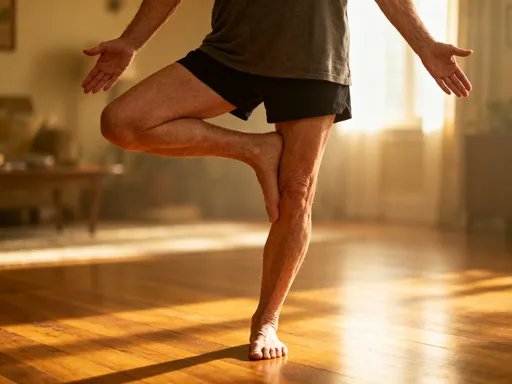
Another foundational exercise is the single-leg stand. I do this while brushing my teeth—about two minutes per side, alternating as I switch brushing hands. At first, I could barely hold it for 10 seconds without wobbling. I kept my eyes open, focused on a fixed point, and stood near a counter for safety. Over weeks, my hold time increased, and the wobbling decreased. I noticed improvements not just in balance, but in how solid my legs felt when standing for long periods. This exercise directly strengthens the muscles in the ankles, calves, and hips, which are crucial for stability.
The chair stand is another favorite. I use a sturdy kitchen chair, sit with feet flat on the floor, and stand up without using my hands. This mimics real-life actions like rising from a sofa or getting out of a car. At first, it was harder than I expected, but within a few weeks, it became smoother. I now do three sets of 10 repetitions, and it’s made a noticeable difference in my leg strength and confidence. I also added the clock reach exercise, where I stand on one leg and reach the opposite hand toward different “clock positions” around my body—like 12, 3, 6, and 9 o’clock. This combines balance with controlled movement, enhancing both coordination and core engagement.
One of the most rewarding changes has been in my daily life. I no longer need to grab the wall when tying my shoes. I can carry a full laundry basket up the stairs without feeling shaky. These small victories are powerful reminders that progress is possible at any age. The key is consistency, not intensity. These exercises don’t take much time, but they create lasting changes when done regularly. I recommend starting with two or three exercises and gradually adding more as confidence grows.
How to Build a Sustainable Routine Without Overthinking It
The biggest obstacle to starting balance training isn’t physical—it’s mental. Many women in their 30s to 50s feel they don’t have time, aren’t athletic enough, or assume it’s only for older adults. But the truth is, balance training doesn’t require a gym membership, special clothes, or even 30-minute workouts. The most effective approach is to integrate it into habits you already have. I started by doing single-leg stands while brushing my teeth, heel-to-toe walks during commercial breaks, and chair stands while waiting for the coffee to brew. These micro-sessions add up and make the practice feel natural, not like another chore on the to-do list.
Consistency matters more than duration. Even 60 seconds of focused balance work each day can lead to improvements over time. The goal isn’t perfection—it’s practice. I recommend choosing one or two exercises and doing them daily for at least two weeks before adding more. Tracking progress can be as simple as noting how long you can hold a single-leg stand or whether you need less support during a heel-to-toe walk. Celebrating small wins, like standing steadily while putting on pants, reinforces motivation and builds confidence.
Another key to sustainability is reframing your mindset. Instead of seeing balance training as another form of exercise, think of it as self-care for your body’s foundation. Just as you prioritize sleep, hydration, and nutrition, balance supports your ability to live fully and safely. It’s not about looking a certain way or achieving a fitness goal—it’s about feeling strong, steady, and capable in your daily life. When you shift the focus from appearance to function, the motivation becomes intrinsic. You’re not doing it to impress anyone; you’re doing it to take care of yourself.
When to Level Up: Adding Challenge Safely
Once basic balance exercises feel comfortable, it’s time to introduce gentle challenges to continue progress. The body adapts quickly, so staying with the same routine can lead to plateaus. The key is to increase difficulty gradually and safely. One way I progressed was by closing my eyes during single-leg stands. Removing visual input forces the body to rely more on proprioception and the vestibular system. I always do this near a wall or counter, never in an open space, and only after mastering the exercise with eyes open.
Another progression is using an unstable surface, such as a folded towel or a balance pad. Standing on a slightly soft surface increases the demand on stabilizing muscles in the feet and ankles. I started by placing a rolled-up yoga mat under one foot during heel-to-toe walks, then progressed to standing on it with both feet. These small changes make a big difference in building resilience. Some people use foam pads or balance discs, but even household items like a folded bath towel work well and keep the practice accessible.
Combining movements is another effective way to level up. For example, I now do a single-leg stand while slowly raising my arms overhead or turning my head side to side. These dynamic challenges improve coordination and brain-body communication. The rule is simple: never push through wobbling or discomfort. If you feel unstable, return to the previous level and practice there until you feel ready. Progress isn’t about how hard you push—it’s about how well you listen to your body. Each small challenge builds real confidence and prepares you for unexpected movements in daily life.
Making Balance Part of Your Health Mindset
Beyond the physical benefits, balance training has changed the way I think about my health. It’s no longer just about checking off workouts or managing weight—it’s about cultivating awareness and respect for my body. Every time I stand on one leg or walk heel-to-toe, I’m reconnecting with my body’s signals. I notice how my feet feel on the floor, how my spine aligns, and how my breath supports movement. This mindfulness extends beyond exercise, influencing how I sit, stand, and move throughout the day.
There’s also a quiet confidence that comes from knowing you can trust your body. Whether it’s walking on a slippery sidewalk, chasing after a pet, or standing in a crowded room, feeling steady brings peace of mind. That confidence isn’t loud or boastful—it’s a deep, quiet assurance that you’re capable. For women who often put others first, this kind of self-assurance is a form of empowerment. It’s not about doing more; it’s about feeling secure in your own skin.
Long-term commitment grows from appreciating small improvements. Instead of waiting for dramatic results, I celebrate the little things: standing without support, walking without looking down, or simply feeling more alert in my body. These moments of progress reinforce the value of consistency. Balance isn’t about perfection—it’s about presence, awareness, and the willingness to show up for yourself, one steady step at a time. By making it a regular part of life, you’re not just preventing falls—you’re building a foundation for a more confident, capable, and resilient future.